Nobody Claps for Video Control. That's the Point.

Every great event has a moment people remember. The LED wall that transforms you into another world. The building that dissolves into projection and becomes a story. The immersive environment where the line between physical and digital disappears. These are the images that fill the highlight reels and the LinkedIn carousels, and they deserve every bit of recognition they get. More often than not, they are extraordinary feats of imagination and execution, the product of creative and technical teams pushing against what was thought possible.


Behind each of them sits a discipline that almost never makes the recap reel. Video control.


A Victim of Its Own Success


In many ways, video control suffers from being very good at its job. Nobody leaves a keynote talking about the signal distribution. Nobody photographs the redundancy architecture, or posts admiringly about the elegance of a media server workflow. The synchronisation systems, the show control programming, the long, unglamorous hours of contingency planning: none of it gets noticed, because when it is working there is, by definition, nothing to notice. Video control tends to enter the conversation at the precise moment something has gone wrong, which is to say the worst possible moment to be discussing it.


That paradox is worth sitting with. Video control is often one of the most critical systems in a production and, at the same time, one of the least visible. The screen that stays live through a keynote, the cue that lands exactly on the beat, the live feed that holds during a broadcast, the projection sequence that never drifts, the multi-site activation that keeps every location in perfect step: all of it is experienced as an absence. An absence of failure. And an absence is a difficult thing to celebrate, which is rather the point.


The Work the Audience Never Sees


At Graymatter Video, we have made a kind of peace with that. We do not measure success by how many people notice the work. We measure it by how many people never have to think about it for a single second. Every seamless visual experience rests on an enormous amount of engineering, planning and problem-solving that the audience will, by design, never see.


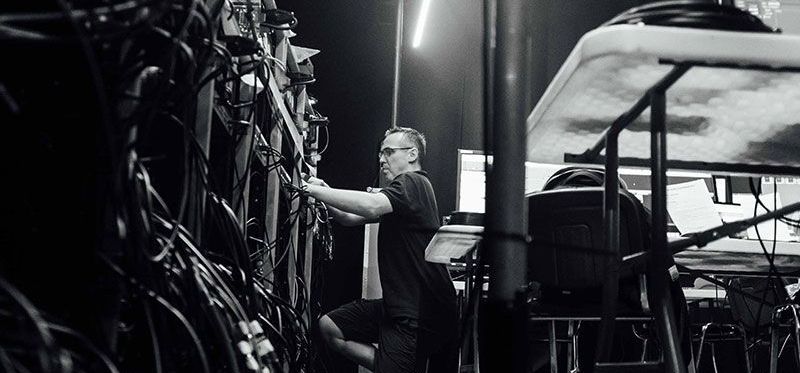
That work begins long before the first cable is plugged in. It means understanding the signal paths in full, building redundancy into every critical workflow, and finding the points where a system might fail before they have any chance to become the points where it does. It means stress-testing everything while the venue is still empty and the stakes are still theoretical. It means designing for the certainty that, on a live show, the circumstances around you will change. Resilience is not something added at the end, once the clever bits are done. It is the thing the whole system is built around.


The productions we work on are growing more complex by the season. A single show might bring together multiple LED systems, projection surfaces, live camera feeds, real-time graphics, media servers, broadcast outputs and remote locations, all running at once and all quietly depending on one another. The technical ambition keeps climbing. The expectation, meanwhile, stays beautifully, almost unfairly, simple. It needs to work. Every time.


What Clients Are Really Buying


When a client commissions video control, the equipment in the racks is the least of what they are paying for. What they are buying is confidence. Confidence that the product launch will run exactly as rehearsed. Confidence that a global brand activation will hold its synchronisation across every market simultaneously. Confidence that the live broadcast will not falter at the one moment that genuinely matters. Confidence that when the creative team reaches for something properly ambitious, the infrastructure beneath it can carry the weight without flinching.


That is where real video control expertise lives, and it is not in the kit. Anyone can hire a media server. Anyone can hire processors and assemble a rack full of impressive technology. The difference is in knowing how all of those parts behave under pressure, how they interact when conditions are working against them, and how to build something that stays standing precisely when the stakes are highest. The hardware is available to everyone. The judgement is not.


The Goal is to Disappear


So no, nobody is going to walk out of an event praising the video control, and we stopped expecting them to long ago. What they remember instead is everything working exactly as it should. The content plays. The screens stay live. The cues land. The story reaches the audience in the form it was always meant to take, and the technology behind it slips quietly out of view.


For us, that vanishing act is the entire point. The goal was never to be seen. It was to build the kind of confidence that lets everyone else shine, and to make sure that when the work is done properly, the audience is left with nothing to think about except the result.


That is what Graymatter Video is for. The part of the show you were never supposed to notice.


Let's talk about your next show. Behind every seamless show is a team that has done it under pressure, on the night, when there was no second take. That is the part of the job we love, and the part we would happily take off your plate. So if you have an event on the horizon, whatever the scale or the complexity, we would like to hear about it. Send us the brief, talk us through the idea, or simply tell us what is keeping you up at night about the video. We will take it from there.
 

October 7, 2026
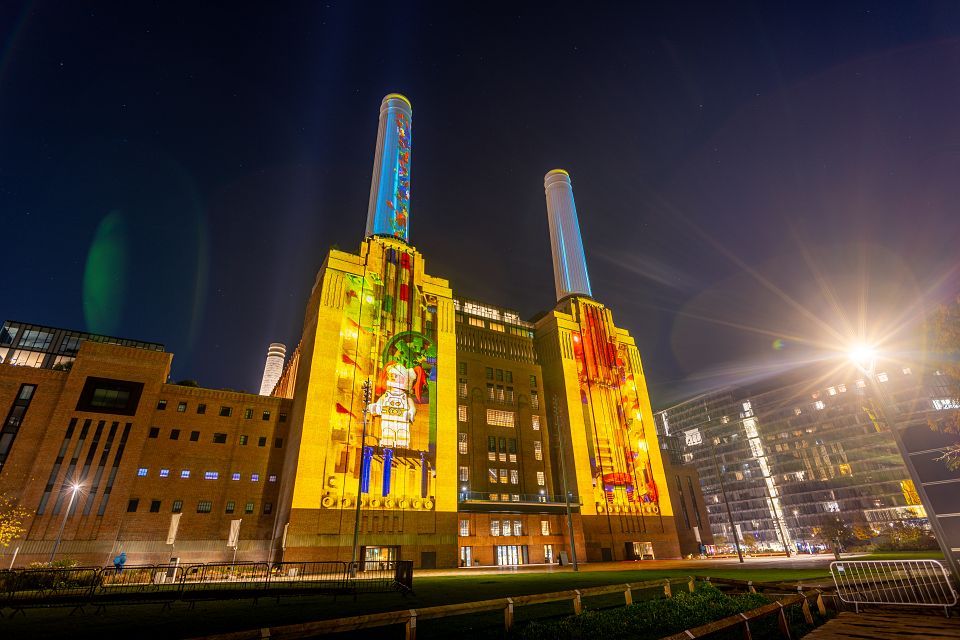
If you’re planning a projection mapping project and have approached several suppliers for costs, you may find yourself looking at quotes that vary considerably. One supplier might recommend a certain number of projectors, another might specify twice as many, and the difference in cost can be significant. On paper, however, both proposals might appear to offer exactly the same thing: projection mapping a building. So, what are you actually comparing? The reality is that not all projection mapping quotes are created equal . Two technical proposals can promise to cover the same building with the same content, yet deliver very different results when the show goes live. And when the whole reason for investing in projection mapping is to create impact, attract attention and make people stop and look, the quality of that final result really matters. Our expert Graymatter Video team approach projection mapping by working backwards from the experience we want the audience to have. Rather than asking simply whether we can put an image onto a particular surface, we look at what is required to make that image bright, clear and impactful in the real-world environment. That distinction can make all the difference. What Makes Great Projection Mapping? At its best, projection mapping has an extraordinary ability to transform a familiar space. Architecture can appear to move, disappear or change shape. A historic façade can become part of an animated story. A landmark building can be transformed into a huge canvas for a brand activation. The technology behind those experiences should almost disappear. The audience shouldn't be thinking about projector quantities, lenses, media servers or light levels. They should simply be experiencing the creative. But making something look effortless can require a significant amount of technical planning behind the scenes. For the illusion to work, the projection needs enough brightness, clarity and consistency to work with the building and compete with the surrounding environment. If the image is too faint or lacks contrast, even exceptional content can lose its impact. That is why a good projection mapping system starts with understanding the location and the creative ambition, rather than simply selecting a projector. Why Brightness Matters in Projection Mapping One of the most important considerations in any projection mapping project is brightness. At Graymatter Video, one of the key measurements we use when designing a projection system is brightness, which we measure in lux. Put simply, lux helps us understand how much light is actually reaching the surface we are projecting onto. This is important because projector specifications alone don't tell the whole story. A projector may have an impressive lumen output, but the audience isn't standing inside the projector reading its specification sheet. They're looking at a building, sometimes from hundreds of metres away, surrounded by other sources of light. The characteristics of that building can have a huge effect on the finished image. A relatively smooth, light-coloured surface will behave very differently from dark brick, stone or highly textured architecture. The size of the façade, distance between the projectors and building, projection angle and available projector positions all influence the eventual result. Then there is the surrounding environment. Streetlights, architectural lighting, illuminated signage and neighbouring buildings can all compete with the projected image. Even the time of year and the location itself can influence how a system needs to be designed.All of these factors help determine how much projection power is actually required. 
By Frederick King • October 1, 2026
iMAG welcomes Malcolm Hall as Technical Asset Manager, bringing 30 years of AV and video experience to its growing technical team in Poole.
C&IT Awards 2026 logo
August 4, 2026
We're thrilled to be shortlisted for the C&IT Awards 2026 in the Best Event Support Services Provider category, recognising excellence in live event delivery.
June 29, 2026
As iMAG continues to grow, we're investing in the people who will help us deliver even more for our clients. We're delighted to welcome David Barton to the team as our new Operations Manager. David brings almost two decades of experience from Encore, where he most recently served as Head of Video , UK. Throughout his career, he has built a reputation for technical expertise, operational excellence and leading high-performing teams, making him a perfect fit for the next chapter of iMAG's journey. At iMAG, we've built our reputation on delivering outstanding technical solutions for live events, brand activations, projection mapping, virtual production and immersive experiences. As demand for our services continues to grow, we're focused on strengthening the operational foundations that allow us to scale while maintaining the responsive, personal service our clients value. David will oversee operations across both iMAG and our specialist video control division, Graymatter Video, helping to refine the systems, logistics and processes that support every project from planning through to delivery. Managing Director Alex Strachan explains: "David has experienced every stage of our industry, from warehouse floors and on-site delivery through to leading a major video team. As we grow, we're investing in the people and processes that let us scale without losing what makes us different. David understood that immediately, and we're excited about the impact he will have." For David, joining iMAG was about more than the projects. "What attracted me to iMAG wasn't just the work, it was the people. I've known the team for many years as a client, and what stands out is their relentless focus on the client and their commitment to exceptional delivery on every project, however demanding. I'm looking forward to strengthening the operational foundations that allow the team to keep delivering at that level while protecting what makes iMAG special." David's appointment marks another important step in iMAG's continued growth. By investing in experienced leadership and robust operational processes, we're ensuring we can continue delivering innovative video solutions while maintaining the flexibility, creativity and attention to detail that our clients expect. We're excited to have David on board and look forward to what we'll achieve together.
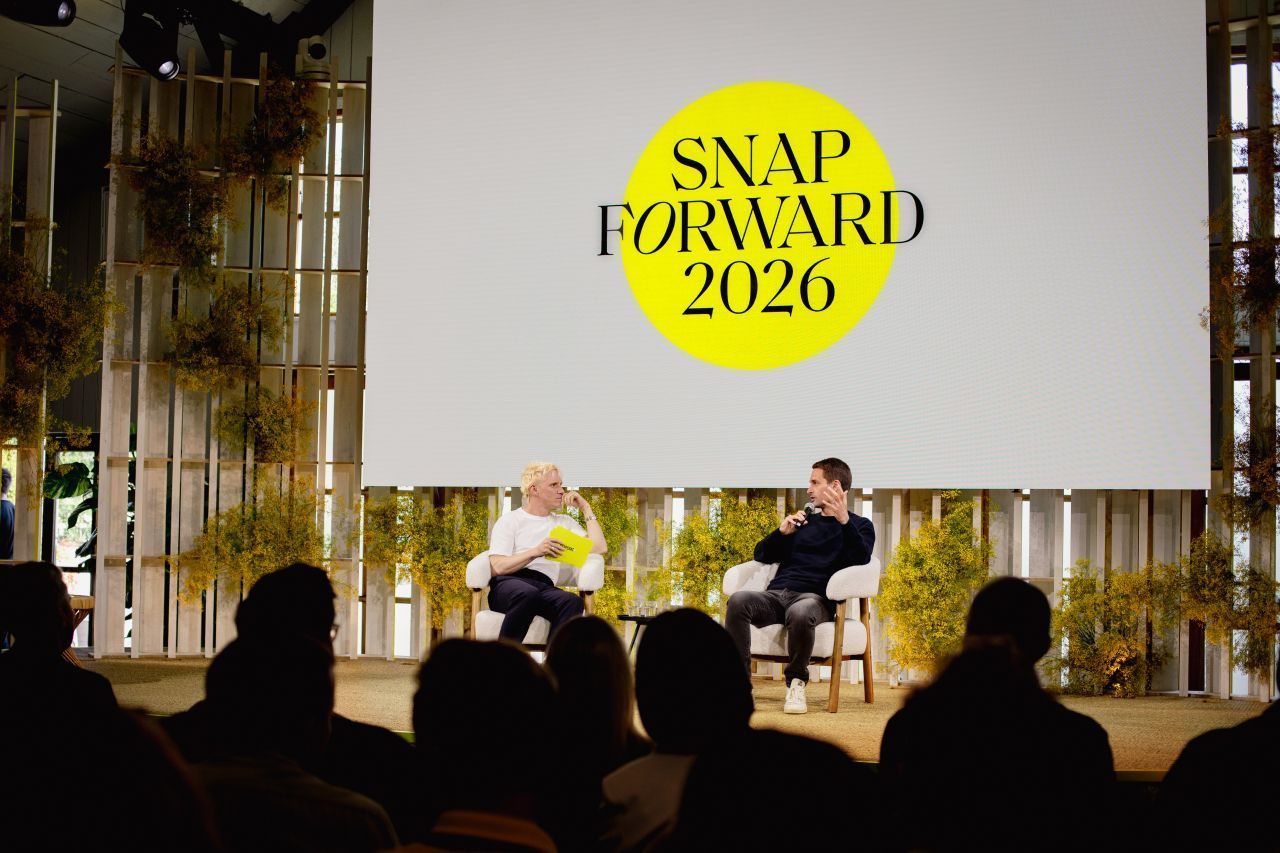
Main stage LED wall at Snap Forward 2026, Soho Farmhouse, displaying the Snap Forward 2026 logo duri
June 8, 2026
iMAG delivered a complete video package for Snap Inc.'s Snap Forward 2026 at Soho Farmhouse, including an ROE Visual Topaz LED wall, Brompton processing and a full PTZ camera package.
Close-up of a black MAG sign with white logo and website text in a dark setting
May 14, 2026
Charli Harding, Client & Brand Director at iMAG, reflects on two decades in live events and production, what it really takes to lead as a woman, and why the industry's future looks brighter than ever.
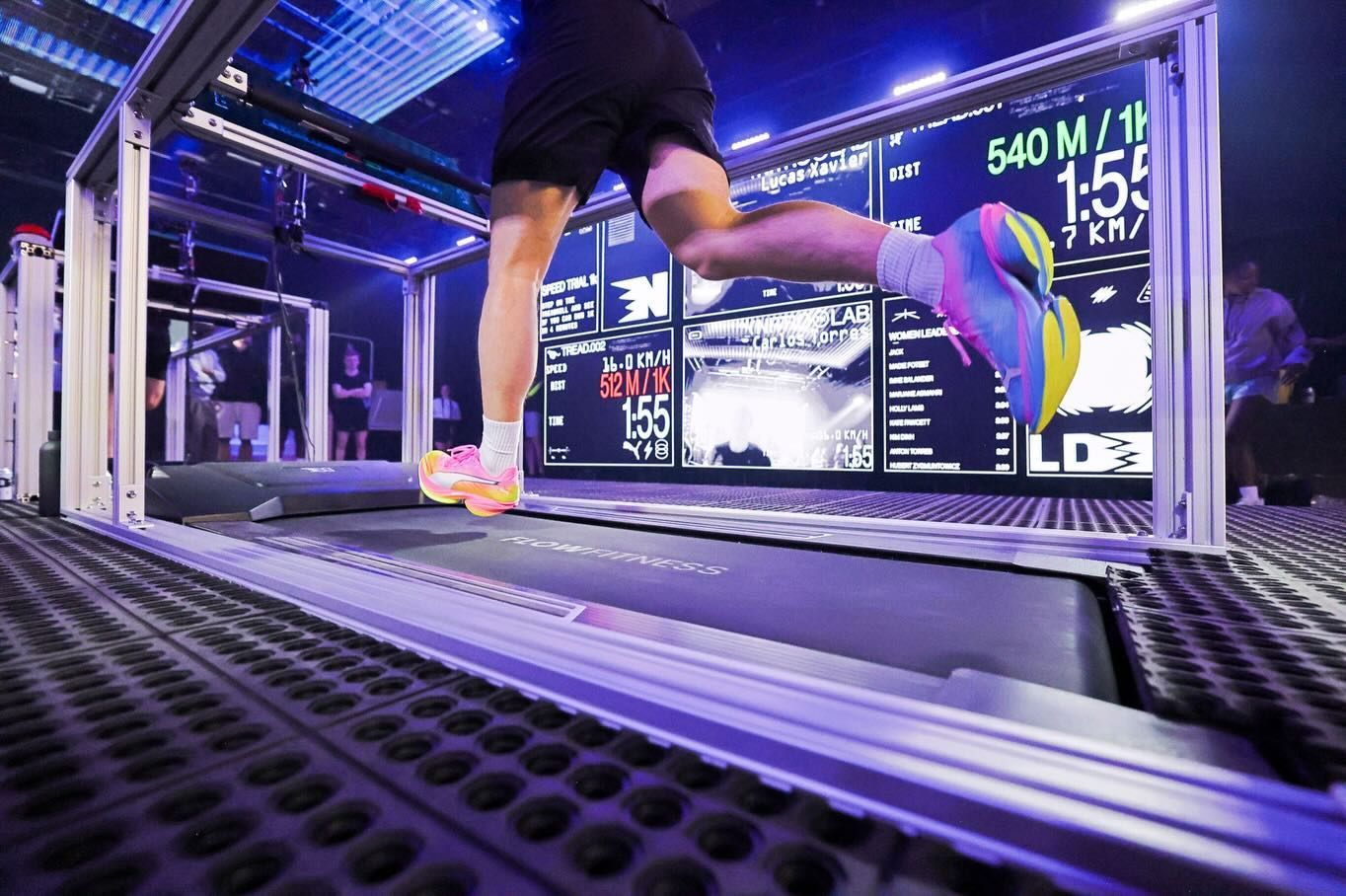
PUMA’s immersive NITRO™ Lab activation during London Marathon 2026
May 12, 2026
Discover how iMAG supported OBO and PUMA’s immersive NITRO™ Lab activation during London Marathon Weekend with premium LED displays, interactive technology and live video solutions.
March 19, 2026
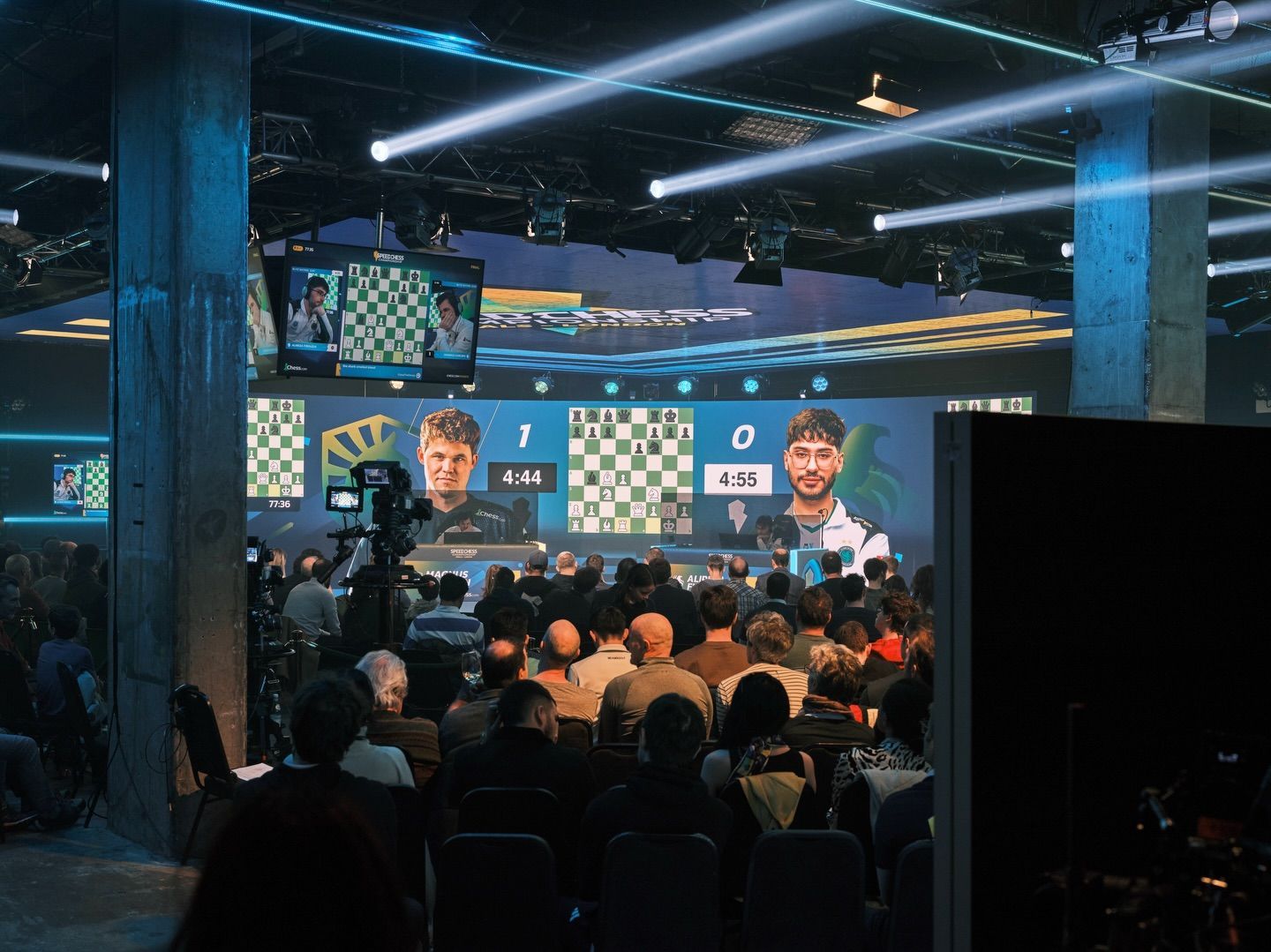
iMAG delivered a complete integrated video solution for the Speed Chess Championship Finals at 180 Studios, creating a broadcast-ready esports environment for Chess.com.
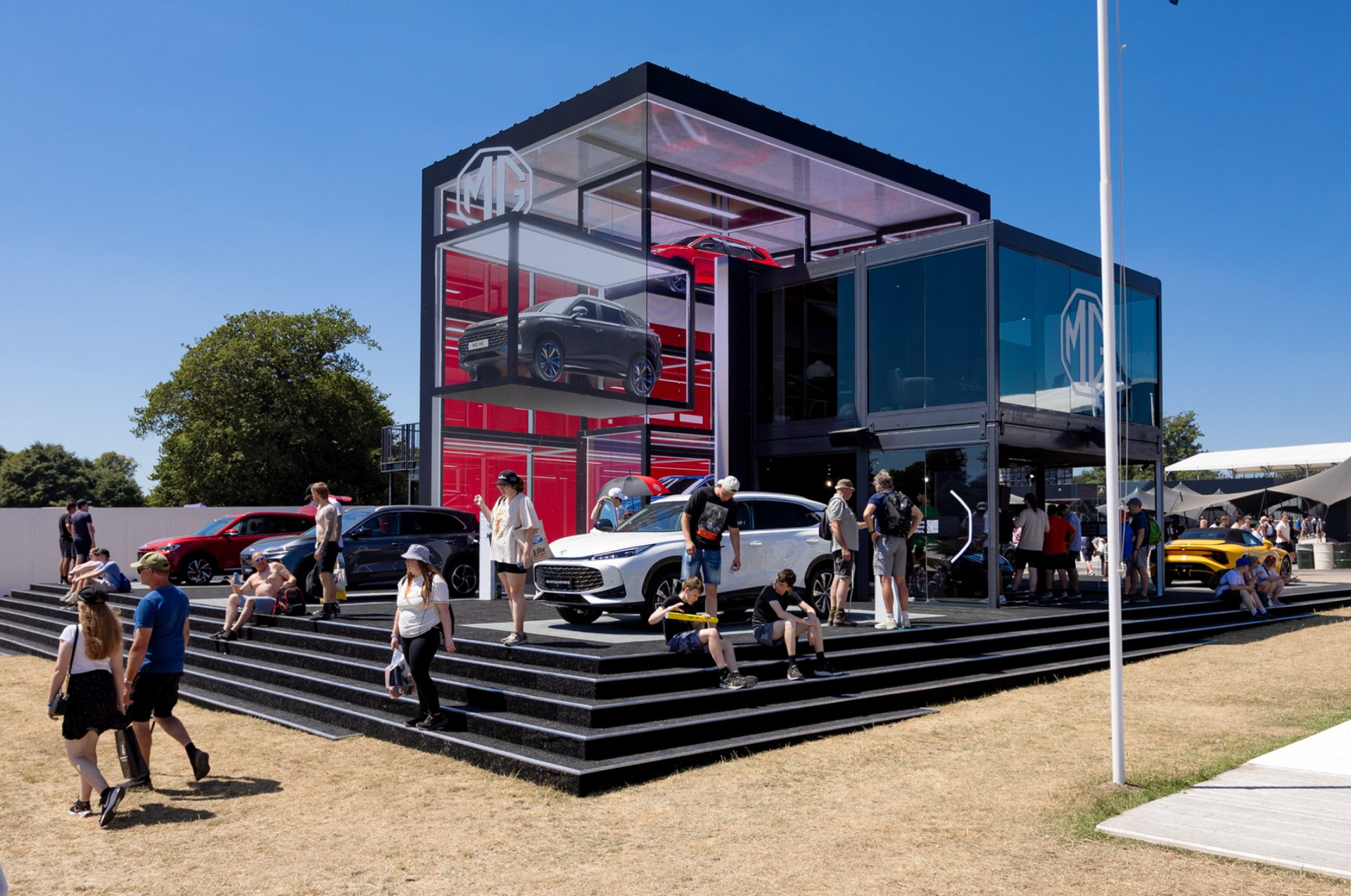
anamorphic LED walls for automative trade stand
February 20, 2026
Explore how anamorphic LED walls create immersive, camera-ready brand experiences for agencies and production managers. Discover how iMAG delivers precision-led LED solutions that amplify impact beyond the event space.
January 7, 2026
Discover how iMAG worked with Blue Revolver to deliver Nike After Dark London at ExCeL London with LED monoliths, Vanish 8 and a 60m projection canvas to maximise impact.